
Why Most Businesses Fail and What to Do About It
Starting a business has never been easier. With a laptop and a few hours, you can launch a website, register a company, and begin trading. But what makes entry so simple also makes quitting just as easy. The moment stress rises, late payments, lost clients, or a quiet month, many founders look for a way out. Businesses don’t collapse because owners stop caring. They collapse because too many exit routes weaken commitment. This blog explores why “exit routes” are so dangerous and what to do instead.

Why Exit Routes Are So Tempting
It’s not the challenges themselves that kill a business, it’s the temptation of an easier option. When quitting feels simple, pressure points turn into excuses, and ordinary problems become reasons to walk away.
The Illusion of Safety
Keeping one eye on a backup job, a side hustle, or an alternative career feels sensible. But divided energy dilutes progress. When half your focus is on leaving, you never fully commit to staying.
Consider a freelance social media and marketing manager. At the start, she enjoyed the flexibility, landed a few retainer clients, and felt optimistic. But when one client cut back their budget and another was slow to pay, she quickly began scrolling job boards. Within weeks, she had taken a permanent in-house role and closed her freelance business. The issue wasn’t a lack of talent, it was that quitting was simply the easiest, lowest-cost option. Without a stronger commitment, even normal bumps felt like signals to give up.
The Psychology Behind Quitting Too Soon
Human nature seeks relief over resilience. Founders interpret failures as signs to give up when there are no genuine stakes involved. These same setbacks are viewed as challenges to be overcome rather than excuses to give up when one has a stake in the outcome.
Dedication Stress Develops Resilience
When founders put genuine time, money, or reputation into their venture, quitting feels unthinkable. A contract cancellation is not the end of the road; rather, it becomes a puzzle to solve. Although it is uncomfortable, commitment pressure is what makes people resilient.
Bridge-Burning Choices
Successful owners often describe “bridge-burning moments”: leaving a safe job, hiring staff, or taking out a lease. These decisions feel risky, but they also make retreat costly. With the bridges burnt, the only option left is forward.
PODCAST VERSION
Why Too Many Exit Routes Weaken the Business
Safety nets feel like risk management, but too many simply make giving up easier. It is evident to employees, customers, and even the founders themselves when a company is
ot fully committed, and this lack of dedication eventually becomes self-fulfilling.
Commitment Signals Confidence
Teams mirror the founder’s attitude. Clients will perceive hesitancy and employees won't feel completely confident if the leader is hedging their bets. Long-term devotion is rarely inspired by businesses founded on half-commitment.
Practical Steps to Close Exit Routes
Strong businesses are built by removing easy outs and replacing them with healthy pressure. Commitment mechanisms, financial, operational, and reputational, make quitting harder and persistence the natural response.
1. Create Financial Stakes
Financial commitment changes behaviour. When very little money is on the line, walking away feels cheap. That’s why so many businesses fold at the first sign of trouble: there’s no cost to quitting.
The solution isn’t reckless risk-taking but making deliberate investments that bind you to the business. You are forced to consider the long term whether you lease space, buy specialised equipment, or even sign software contracts. This could entail investing in training, updating client-facing technologies, or committing to a suitable CRM for service-led businesses. These aren’t just costs, they’re signals that you’re building something you won’t abandon lightly.
Every choice is more incisive when the founders are investing their own funds, time, or resources. It becomes costly to quit, and the urge to do so frequently leads to innovative solutions you might not have otherwise thought of.
2. Build Operational Dependencies
Many small firms operate in a way where, if the founder stopped tomorrow, nobody else would be affected. That might feel safe, but it also makes giving up far too easy.
Hiring even one person creates accountability. Their mortgage, career, and wellbeing become tied to your success. Signing supplier agreements builds obligations you have to uphold. Developing intellectual property or certifications creates assets too valuable to simply walk away from.
Consider a modest trades business that hires apprentices. The owner is now in charge of someone else's development and means of subsistence rather than merely working for oneself. That moral obligation creates resilience. When pressure hits, the instinct isn’t “Should I quit?” but “How do I make this work for them and me?”
Operational dependencies transform your business from a personal experiment into something bigger, something you can’t abandon without serious consequences.
3. Make Commitment Public
Private promises are easy to break. Public commitments, on the other hand, create reputational stakes that push you to deliver.
This doesn’t mean broadcasting unrealistic goals on social media. It means creating visible markers of progress: announcing a product launch, sharing milestones with clients, or joining industry bodies where your name is tied to professional standards. Seriousness is communicated by even something as basic as posting insights on a regular basis online.
Peers, clients, and even rival businesses begin to hold you responsible, and this external criticism helps you stay focused. It’s the same reason people stick to exercise programmes
once they’ve told their friends, backing out means losing face.
For service-led businesses, building a personal brand tied to your company’s success is especially powerful. When your reputation and the business’s reputation overlap, quitting is no longer a quiet retreat, it’s now a very public step back. That pressure, uncomfortable as it is, often keeps founders pressing forward.

4. Set Clear Success Metrics
A vague sense of “doing alright” is one of the most dangerous exit routes. Convincing yourself that quitting makes sense when, in fact, you've been making progress is too simple without concrete steps.
A distinct boundary between progress and regression can be established by establishing success measures, revenue targets, client retention, and cash flow buffers. Tracking these regularly prevents drift and replaces gut feel with evidence.
Imagine an HR consultancy. If their only measure of success is “more clients,” a quiet month feels like failure. But if they’ve set goals around response time, customer retention, or profitability per client, they’ll see progress in areas that matter, even when sales are uneven. That clarity helps them stay committed rather than assuming the business isn’t working.
Metrics aren’t just about pressure, they’re about perspective. They stop you from bailing out in moments of doubt and give you proof that the business is moving in the right direction.
5. Build Customer Reliance
Businesses whose clients truly need them are the ones that thrive. It's simple to leave a client if they can live without you tomorrow. If your service has become essential, quitting feels like abandoning people who rely on you.
Long-term contracts, retained services, or becoming part of a client’s workflow all build reliance. For example, an IT services firm that handles monthly maintenance isn’t just a vendor, they’re a critical part of their clients’ operations. Leaving isn’t just a personal choice; it disrupts dozens of businesses.
For wellness clinics, this might mean structuring treatment plans over months rather than one-off sessions. For marketing agencies, it could be embedding into a client’s strategy rather than running a single campaign.
When customers depend on you, quitting stops being a private decision. It becomes a break in trust, and that social and ethical weight makes persistence the more natural path.
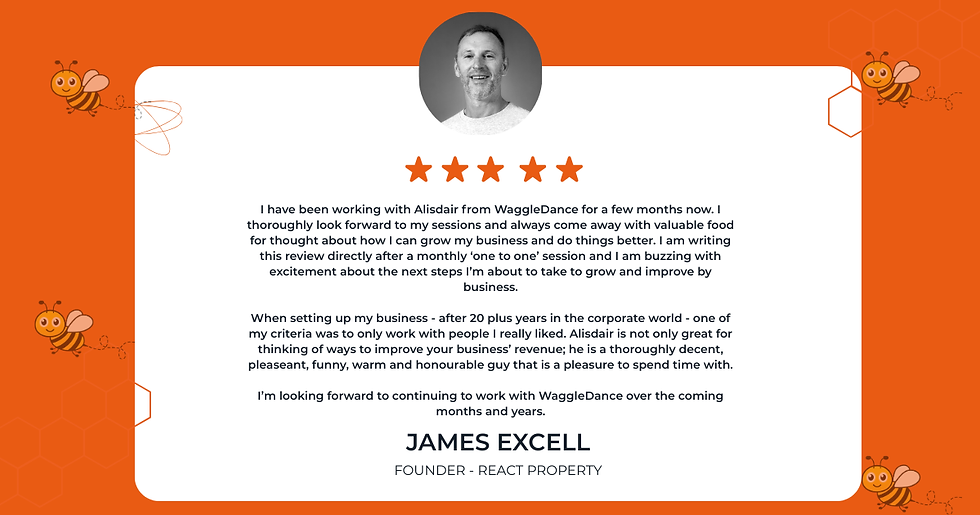
What Our Clients Say
What to Do Next
If your business feels optional, that’s the danger signal. Success isn’t about having endless back-up plans; it’s about creating focus and stakes that make resilience easier than retreat.
At Waggle Dance, we help service-led firms build businesses that owners can’t walk away from. Through behaviour-led marketing, sales structures, and commercial clarity, we create commitment mechanisms that close escape routes and keep businesses moving forward.
FAQs
1. Isn’t keeping options open just sensible risk management?
It feels that way, but for business, too many options weaken commitment. In investments, diversification reduces risk. In business, it often creates excuses. Owners convince themselves quitting is “sensible” when really they’re avoiding the discomfort needed for growth.
2. What if I’ve already left too many exit routes open?
You don’t need to flip everything overnight. Start by adding stakes in small but meaningful ways: invest in a tool you’ll actually use, commit to publishing progress publicly, or hire part-time support. Each layer of accountability makes persistence more natural.
3. How do I know if I’m taking my business seriously enough?
Consider the following question: "What would I do differently today if quitting tomorrow meant serious consequences?" You need to make a deeper commitment if the responses include improved marketing, tighter budgets, or more transparent sales procedures.
4. Can too much commitment trap me in a failing business?
It can, but that’s the exception, not the rule. Most firms fail from too little commitment, not too much. The safeguard is clear metrics: if the numbers and results show no improvement despite full effort, then it’s time to adjust, not to quit prematurely.
5. What’s the difference between persistence and stubbornness?
Persistence adapts to reality. It entails being adaptable with the approaches while maintaining the objective. Ignoring facts and refusing to alter one's direction are signs of stubbornness. Although they are eager to test and improve their strategy, good business owners have a strong commitment.
Determination starts a business. Commitment keeps it alive. Let’s have a Clarity Call Book Here and discover we can help you remove the exit routes, build resilience, and create businesses that last.


